 Image 1 of 1
A research-informed exploration of coherence, leadership, and human dignity in the age of artificial intelligence.
In an era defined by accelerating technology, the question is no longer whether machines will become more intelligent—but whether humans will remain deeply human.
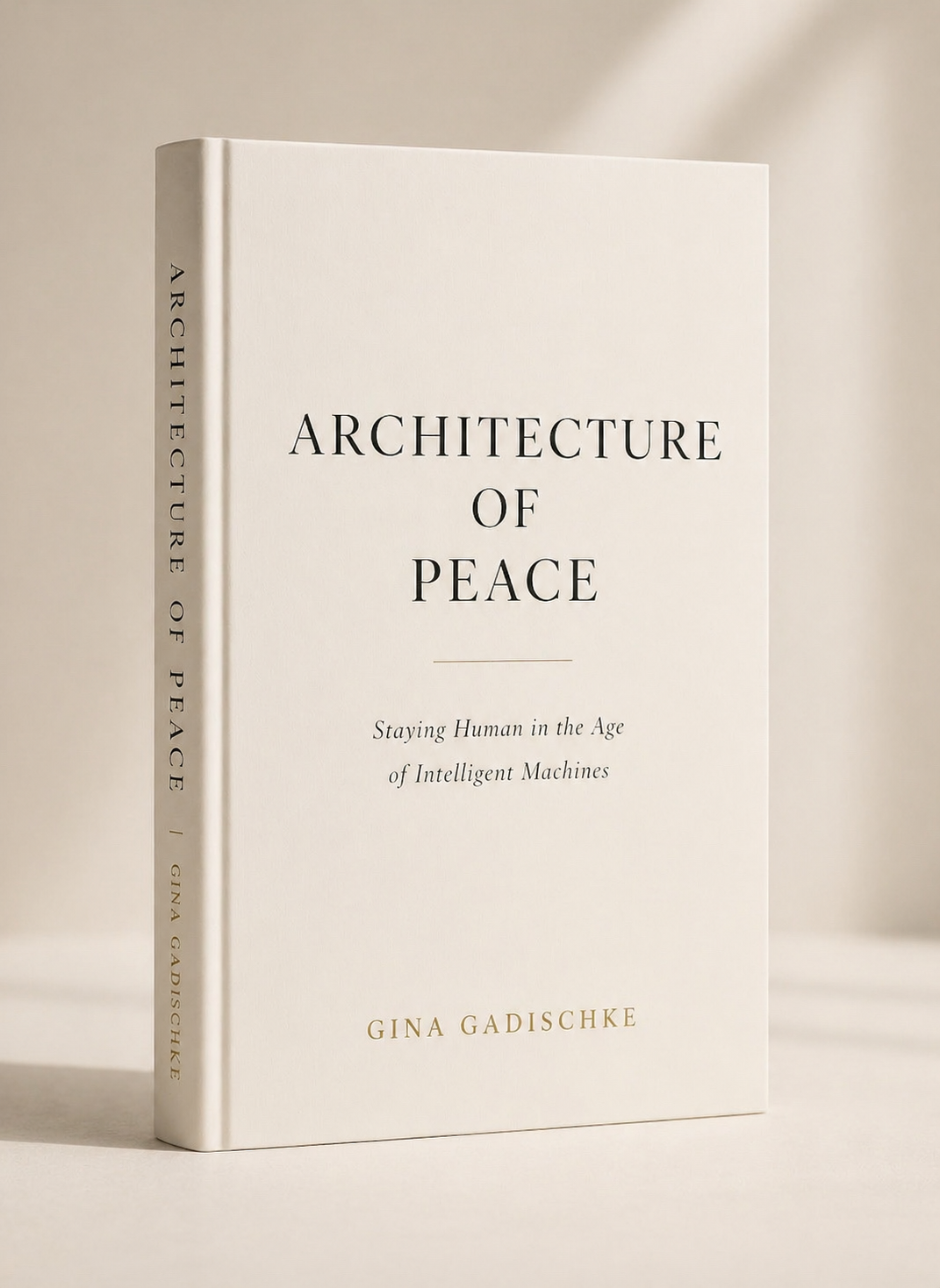
Architecture of Peace is a refined, research-informed exploration of how coherence, dignity, and inner stability can be cultivated as essential foundations for leadership, decision-making, and collective life in the age of artificial intelligence.
Written at the intersection of consciousness research, integrative health, and systems thinking, this work introduces a new paradigm: that peace is not merely an ideal, but a structure—one that can be consciously designed within individuals, organizations, and the systems shaping our future.
Through a synthesis of psychological insight, coherence-based practices, and governance-aware thinking, the book examines:
how human perception and emotional regulation influence technological outcomes
why intelligence without coherence leads to fragmentation
how ethical, human-centered systems can be cultivated in complex environments
and what it means to remain grounded, sovereign, and clear in a world of increasing automation
This is not a book about resisting technology.
It is a book about meeting it with depth.
For leaders, researchers, and thoughtful individuals navigating the intersection of humanity and innovation, Architecture of Peace offers a framework for designing lives—and systems—that sustain clarity, integrity, and trust.
Peace, in this context, is not passive.
It is practiced.
It is embodied.
It is built.
A research-informed exploration of coherence, leadership, and human dignity in the age of artificial intelligence.
In an era defined by accelerating technology, the question is no longer whether machines will become more intelligent—but whether humans will remain deeply human.
Architecture of Peace is a refined, research-informed exploration of how coherence, dignity, and inner stability can be cultivated as essential foundations for leadership, decision-making, and collective life in the age of artificial intelligence.
Written at the intersection of consciousness research, integrative health, and systems thinking, this work introduces a new paradigm: that peace is not merely an ideal, but a structure—one that can be consciously designed within individuals, organizations, and the systems shaping our future.
Through a synthesis of psychological insight, coherence-based practices, and governance-aware thinking, the book examines:
how human perception and emotional regulation influence technological outcomes
why intelligence without coherence leads to fragmentation
how ethical, human-centered systems can be cultivated in complex environments
and what it means to remain grounded, sovereign, and clear in a world of increasing automation
This is not a book about resisting technology.
It is a book about meeting it with depth.
For leaders, researchers, and thoughtful individuals navigating the intersection of humanity and innovation, Architecture of Peace offers a framework for designing lives—and systems—that sustain clarity, integrity, and trust.
Peace, in this context, is not passive.
It is practiced.
It is embodied.
It is built.